






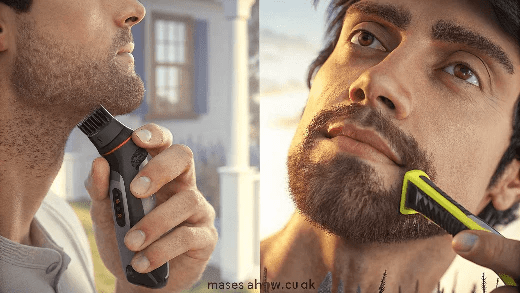
Electric Shaver vs Razor: Which Is Best for Your Skin?
Choosing between an electric shaver and a razor depends on your skin type, grooming routine, and priorities—whether that's speed, closeness, or minimizing irritation. Electric shavers offer convenience and reduced razor burn, while manual razors deliver the closest possible shave with proper technique. This guide breaks down the pros, cons, and best use cases for each method so you can make an informed decision.
For a balance of speed and comfort, explore electric shavers designed to reduce irritation while delivering a close, smooth finish.
Electric Shaver vs Razor: Core Differences
|
Feature |
Electric Shaver |
Manual Razor |
|
Closeness |
Close, but leaves very fine stubble |
Closest possible shave (cuts at skin level) |
|
Speed |
3–5 minutes (no prep needed) |
10–15 minutes (requires prep, cream, cleanup) |
|
Skin Irritation |
Lower risk (foil/rotary barrier) |
Higher risk (direct blade contact) |
|
Maintenance |
Replace foils/heads every 12–18 months |
Replace cartridges every 5–7 shaves |
|
Convenience |
Dry or wet shaving, cordless |
Requires water, cream, sink access |
|
Learning Curve |
Minimal |
Moderate (angle, pressure, technique) |
|
Cost Over Time |
Higher upfront, lower long-term |
Lower upfront, higher long-term (cartridges) |
|
Best For |
Sensitive skin, daily shaving, speed |
Maximum smoothness, occasional shaving |
Pros and Cons of Electric Shavers

Advantages
Speed and Convenience:
Electric shavers work dry (no water or cream needed) and deliver a close shave in 3–5 minutes. Ideal for quick morning routines.
Reduced Irritation:
Foil or rotary heads create a barrier between blades and skin, reducing nicks, cuts, and razor burn. This makes electric shavers gentler for sensitive skin.
Versatility:
Wet/dry electric shavers work in the shower with gel or dry on-the-go. Many models include trimmer attachments for sideburns and beards.
Long-Term Value:
After the initial investment, electric shavers cost less over time—no need for constant cartridge replacements.
Disadvantages
Not as Close:
Even the best electric shavers leave ultra-fine stubble. If you want glass-smooth skin, a manual razor delivers closer results.
Higher Upfront Cost:
Quality electric shavers require a larger initial investment compared to disposable or cartridge razors.
Learning Period:
Skin needs 2–3 weeks to adjust to electric shaving. Initial use may cause slight irritation or discomfort.
Maintenance Required:
Foils and rotary heads require cleaning after each use and replacement every 12–18 months.
Pros and Cons of Manual Razors

Advantages
Closest Possible Shave:
Manual razors cut hair at the skin surface, delivering a perfectly smooth finish that electric shavers can't match.
Lower Initial Cost:
Disposable razors and safety razors are inexpensive upfront, making them accessible for anyone.
Precision:
Manual razors excel at detail work—shaping beards, cleaning necklines, and defining edges.
No Charging Required:
No batteries, cords, or electronics—razors work anywhere, anytime.
Disadvantages
Higher Irritation Risk:
Direct blade contact increases the likelihood of nicks, cuts, razor burn, and ingrown hairs, especially with improper technique.
Time-Consuming:
Manual shaving requires prep (warm water, shaving cream), multiple passes, and cleanup—typically 10–15 minutes total.
Ongoing Costs:
Cartridge razors require frequent replacement (every 5–7 shaves), adding up over time.
Requires Technique:
Proper angle, pressure, and stroke direction take practice. Mistakes lead to irritation and uneven results.
Electric Shaver vs Razor for Sensitive Skin

Why Electric Shavers Win for Sensitive Skin
Electric shavers reduce skin contact through protective foils or rotary heads, minimizing friction and irritation. Foil shavers, in particular, are ideal for sensitive skin because they:
- Create a physical barrier between blades and skin
- Require no shaving cream (avoiding potential irritants)
- Reduce the risk of nicks and cuts
- Work quickly with minimal passes
For sensitive skin options, see best electric shavers for sensitive skin with hypoallergenic foils and low-friction coatings.
When Manual Razors Work for Sensitive Skin
Manual razors can work for sensitive skin with proper technique:
- Use a sharp, single-blade safety razor (fewer blades = less irritation)
- Shave with the grain on the first pass
- Apply thick, moisturizing shaving cream to reduce friction
- Rinse with cool water and apply alcohol-free aftershave balm
However, even with perfect technique, manual razors carry higher irritation risk than electric shavers.
Electric Shaver vs Safety Razor
What Is a Safety Razor?
A safety razor uses a single, replaceable double-edge blade held at a fixed angle by a protective guard. It offers closer shaves than electric shavers and costs less than cartridge razors over time.
Comparison
|
Feature |
Electric Shaver |
Safety Razor |
|
Closeness |
Close (leaves fine stubble) |
Very close (nearly smooth) |
|
Irritation |
Low (barrier protection) |
Moderate (requires skill) |
|
Speed |
3–5 minutes |
10–15 minutes |
|
Cost |
Higher upfront, low maintenance |
Low upfront and ongoing |
|
Learning Curve |
Minimal |
Steep (angle, pressure critical) |
Best Choice: Electric shavers for speed and convenience; safety razors for closeness and economy.
How to Choose: Electric Shaver vs Razor
Choose an Electric Shaver If You:
- Have sensitive skin prone to razor burn or ingrown hairs
- Shave daily or multiple times per week
- Value speed and convenience over maximum closeness
- Want a tool for both wet and dry shaving
- Travel frequently and need cordless operation
Choose a Manual Razor If You:
- Prefer the closest possible shave
- Shave less frequently (2–3 times per week or less)
- Enjoy traditional shaving rituals and prep time
- Have resilient skin that tolerates blade contact
- Want precision for beard shaping and edging
Consider Both If You:
- Use an electric shaver for daily maintenance and a razor for special occasions
- Maintain a beard (use a razor for clean lines, electric for quick touch-ups)
- Want flexibility based on time and setting
Maintenance Tips for Both Methods
Electric Shaver Care
Daily:
- Rinse foil or rotary heads under warm water (if waterproof).
- Shake off excess water and air-dry.
- Brush away hair buildup.
Weekly:
- Disassemble heads and rinse each component.
- Apply 1–2 drops of lubricant (if recommended).
- Dry thoroughly before reassembling.
Every 12–18 Months:
Replace foils or rotary heads to maintain cutting performance.
Manual Razor Care
After Every Shave:
- Rinse blade under hot water to remove hair and cream.
- Shake off excess water and store in a dry area (not the shower).
- Replace cartridge blades after 5–7 shaves.
Safety Razor:
- Rinse blade after each use.
- Replace blades every 3–5 shaves (blades are inexpensive).
- Clean handle monthly with warm, soapy water.
Which Gives a Closer Shave?
Manual razors deliver the closest shave because they cut hair at the skin surface. Electric shavers leave ultra-fine stubble (0.05–0.1mm) that feels smooth but isn't completely bare.
Why the difference?
- Manual razors: Blades make direct contact with skin, cutting hair flush.
- Electric shavers: Foil or rotary barriers lift and cut hair slightly above the skin.
For most people, the difference is negligible in daily use. Manual razors win for special occasions (weddings, photo shoots); electric shavers win for daily convenience.
For more on shaving technology, see this electric shaver guide on Wikipedia.
Frequently Asked Questions
Is an electric shaver better than a razor?
It depends on your priorities. Electric shavers are better for speed, convenience, and reducing irritation, making them ideal for daily shaving and sensitive skin. Manual razors are better for maximum closeness and precision detail work.
Which is better for sensitive skin: electric shaver or razor?
Electric shavers are better for sensitive skin because foil or rotary heads create a barrier that reduces direct blade contact, minimizing razor burn, nicks, and ingrown hairs.
Do electric shavers give a close shave?
Yes, but not as close as manual razors. Electric shavers leave ultra-fine stubble (0.05–0.1mm) that feels smooth but isn't completely bare. Manual razors cut at skin level for a glass-smooth finish.
Are electric shavers faster than razors?
Yes. Electric shavers take 3–5 minutes with no prep needed. Manual razors require 10–15 minutes including warm water prep, shaving cream application, multiple passes, and cleanup.
How long do electric shavers last?
With proper maintenance, electric shavers last 3–5 years. Foils or rotary heads need replacement every 12–18 months to maintain cutting performance.
Can I use an electric shaver every day?
Yes. Electric shavers are designed for daily use and cause less irritation than manual razors, making them ideal for frequent shaving.
Conclusion
The choice between an electric shaver and a razor comes down to your skin type, grooming priorities, and daily routine. Electric shavers win for speed, convenience, and reducing irritation, making them the best choice for sensitive skin and daily maintenance. Manual razors deliver unmatched closeness and precision but require more time, technique, and carry higher irritation risk.
For most users, an electric shaver offers the best balance of performance and ease.Ready to upgrade your shaving routine? Explore electric shavers with foil and rotary options designed for sensitive skin, wet/dry use, and long-lasting performance.

Looking for something else?

How to Cut Baby Boy Hair with Clippers: Step-by-Step Guide
LEARN MORE
Do Hair Clippers Get Dull? Causes, Signs & Prevention
LEARN MORE
Can an Electric Shaver Cut You? Safety Facts & Prevention
LEARN MORE
How to Shave Balls with Electric Shaver: Safe Guide
LEARN MORELooking for something else?

Does Using Trimmer Increase Hair Growth? Facts & Myths
LEARN MORE
Best Hair Clippers for Men: Top Picks for Home & Pro Use
LEARN MORE
Best Professional Hair Clippers for Barbers: Top Picks
LEARN MOREYou may also like


Electric Shaver Y4


Y4T9 Easy Start Kits
Further reading
Best Hair Clippers for Perfect Fades at Home
Clipper Lever Open vs Closed: What It Means (with mm)
Why You Need a Cordless Detailer Trimmer (And How to Pick the Right One)