





Corded vs Cordless Hair Clippers: Which Is Better?
The corded vs cordless hair clippers debate centers on power delivery and mobility: corded clippers provide unlimited, consistent power through direct electrical connection, ideal for heavy-duty professional use and thick hair, while cordless clippers offer superior maneuverability and portability with rechargeable batteries (60–180 minutes runtime), perfect for home use, fades, and detailed styling.
Understanding the hair clipper power options helps you choose based on cutting frequency, hair type, and usage environment.
Corded vs Cordless: Key Differences
|
Feature |
Corded Clippers |
Cordless Clippers |
|
Power Source |
Direct AC power (unlimited) |
Rechargeable battery (60–180 min) |
|
Power Consistency |
Constant maximum power |
Decreases as battery drains |
|
Mobility |
Limited by 8–10 ft cord |
Full 360-degree freedom |
|
Weight |
Lighter (no battery) |
Heavier (battery adds 2–4 oz) |
|
Best For |
Long sessions, thick hair, all-day professional use |
Home cuts, fades, self-cutting, mobile barbers |
|
Maintenance |
Replace cord if damaged |
Battery replacement after 2–4 years |
|
Noise Level |
Generally quieter |
Slightly louder (motor works harder) |
|
Runtime |
Unlimited |
60–180 minutes per charge |
|
Popular Models |
Wahl Senior, Oster Classic 76 |
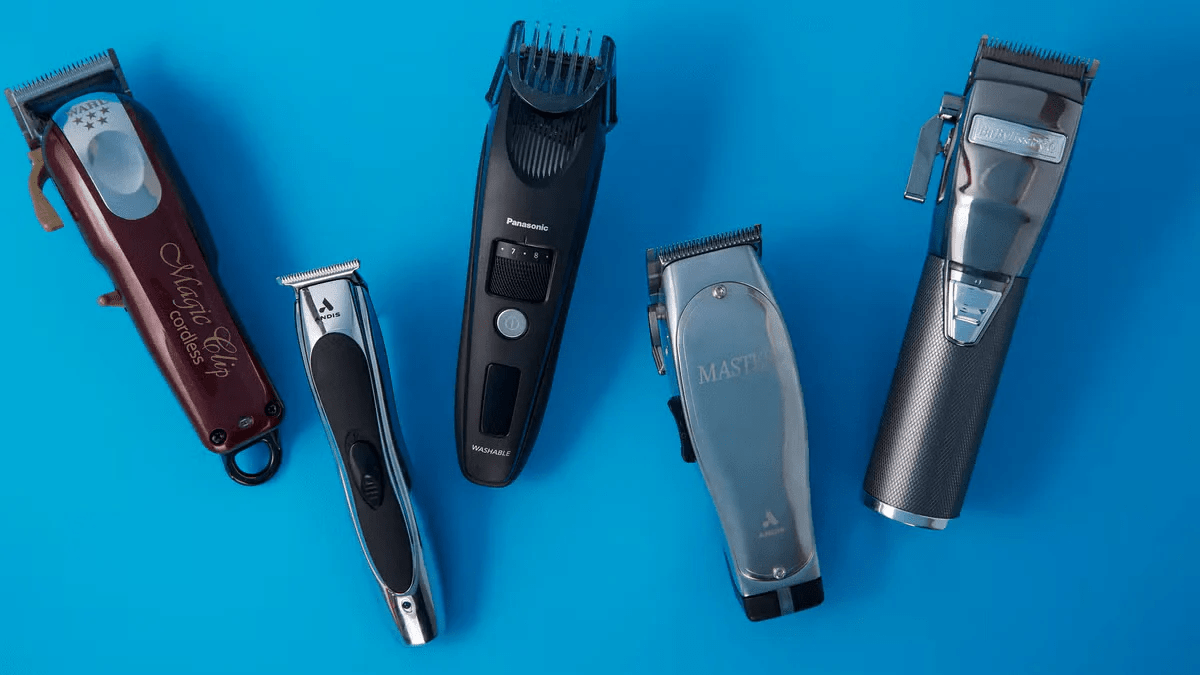
Andis Master Cordless, Wahl Magic Clip |
Corded Hair Clippers: Pros & Cons

Advantages of Corded Clippers
Unlimited Power:
- Never dies mid-cut (constant AC power)
- No charging needed (plug and go)
- Always full power (doesn't weaken over time)
Consistent Performance:
- Maximum motor speed maintained throughout cut
- Better for thick hair (power never diminishes)
- Professional reliability (no battery concerns)
Lighter Weight:
- No battery (2–4 oz lighter than cordless)
- Less hand fatigue during long sessions
- Better balance for some users
Lower Cost:
- Generally less expensive than cordless equivalents
- No battery replacement needed
- Simpler technology (fewer components to fail)
Disadvantages of Corded Clippers
Limited Mobility:
- 8–10 ft cord restricts movement
- Cord can tangle around client/user
- Harder for self-cutting (cord gets in way)
- Requires nearby outlet
Workspace Constraints:
- Cord management necessary
- Trip hazard in busy shops
- Not suitable for mobile work (outdoor events, house calls)
Harder for Detail Work:
- Cord weight pulls during intricate fades
- Less maneuverable around head curves
- Tethered feeling reduces precision for some barbers
Cordless Hair Clippers: Pros & Cons

Advantages of Cordless Clippers
Maximum Mobility:
- 360-degree freedom (no cord restrictions)
- Easier self-cutting (move freely around head)
- Better for fades (smooth, uninterrupted motion)
- Mobile-friendly (house calls, events, outdoor)
Convenience:
- No outlet needed (cut anywhere)
- Cleaner workspace (no cord clutter)
- Travel-friendly (portable grooming)
Professional Detailing:
- Better maneuverability for tight fades
- Smoother motion around head curves
- No cord interference during precise work
Disadvantages of Cordless Clippers
Limited Runtime:
- 60–180 minutes per charge (varies by model)
- Must plan charging (overnight or between sessions)
- Power decreases as battery drains (some models)
- Dies mid-cut if not monitored
Battery Lifespan:
- Batteries degrade after 2–4 years (500+ charges)
- Replacement batteries needed eventually
- Performance declines over time
Heavier Weight:
- Battery adds 2–4 oz compared to corded
- Can cause fatigue during long sessions
Higher Initial Cost:
- More expensive than corded equivalents
- Premium for technology (battery, charging system)
When to Choose Corded Clippers

Best Use Cases for Corded
Professional High-Volume Shops:
- All-day cutting (6–8 hours continuous use)
- Back-to-back clients (no time for charging)
- Heavy-duty work (thick, dense hair all day)
Thick or Coarse Hair:
- Maximum power needed (doesn't diminish)
- Consistent cutting through dense texture
- No worry about battery drain mid-cut
Stationary Cutting:
- Barbershop with stations (outlets accessible)
- Home bathroom setup (outlet nearby)
- Consistent location (not moving between spaces)
Budget-Conscious Buyers:
- Lower upfront cost than cordless
- No battery replacement expense
- Long-term value (no degrading performance)
When to Choose Cordless Clippers
Best Use Cases for Cordless
Home Use & Self-Cutting:
- Full mobility (move around bathroom easily)
- Self-cutting easier (no cord tangling)
- Occasional use (battery lasts weeks between charges)
Fades & Detail Work:
- Smooth motion essential for blending
- 360-degree access around head
- No cord pulling during intricate work
Mobile Barbers:
- House calls (no outlet needed)
- Outdoor events (weddings, photo shoots)
- Traveling professionals (portable setup)
Modern Shop Preference:
- Cord-free workspace (cleaner, safer)
- Client comfort (no cord across body)
- Professional appearance (sleek, modern)
Multiple Locations:
- Move between stations freely
- Outdoor cutting (patios, backyards)
- Flexible setup (no outlet dependency)
Modern Cordless Technology: Closing the Gap
High-Performance Cordless Models
Professional-Grade Power:
Modern cordless clippers now rival corded performance:
- Andis Master Cordless: 7,200 RPM (matches corded Andis Master)
- Wahl 5 Star Magic Clip: 6,000 RPM V9000 motor
- BaBylissPRO GoldFX+: 7,200 RPM Ferrari-designed engine
Advanced Battery Technology:
- Lithium-ion batteries: Consistent power until depletion
- 120–180 minute runtimes: 6–8 haircuts per charge
- Quick charging: 1–2 hours for full charge
- 500+ charge cycles: 2–4 years battery life
Result: Top cordless models now match corded power for most professional applications.
Best of Both Worlds: Hybrid Approach
Professional Strategy
Many barbers use both types strategically:
Corded for:
- Bulk removal (initial cutting)
- Thick hair clients
- All-day marathon sessions
Cordless for:
- Fades and blending
- Detail work and edges
- Final finishing touches
Recommended Setup
For Professionals:
- 1 corded clipper (Wahl Senior, Oster Classic 76)
- 1 cordless clipper (Andis Master Cordless, Wahl Magic Clip)
- Total investment: Best of both technologies
For Home Users:
- Start cordless (convenience outweighs power needs)
- Choose models with 90+ min runtime
- Keep charger accessible
Battery Care for Cordless Clippers
Maximizing Battery Life
Charging Best Practices:
- Charge fully before first use
- Recharge after every use (lithium-ion has no memory effect)
- Don't fully discharge repeatedly (damages battery)
- Store at 40–60% charge if not using for extended periods
Extending Lifespan:
- Avoid extreme temperatures (60–75°F ideal)
- Use manufacturer charger only
- Don't leave on charger for days after full charge
- Replace battery after 500+ cycles (2–4 years)
Signs Battery Needs Replacement:
- Runtime drops below 60% of original
- Won't hold charge overnight
- Powers down randomly during use
- Battery swells or overheats
Frequently Asked Questions
Should I get corded or cordless hair clippers?
Choose cordless for home use, self-cutting, fades, and mobile work (90–180 min runtime provides 4–8 cuts per charge). Choose corded for professional all-day use, very thick hair, and stationary setups where unlimited power is essential. Modern high-performance cordless (Andis Master Cordless, Wahl Magic Clip) match corded power for most applications.
Do cordless clippers lose power as the battery drains?
Modern lithium-ion cordless clippers maintain consistent power until battery reaches approximately 10–20% remaining, then power drops noticeably. Budget cordless models with older battery technology may gradually lose power throughout use. Premium cordless models (Andis, Wahl, BaBylissPRO) use smart battery management for consistent performance until depletion.
How long do cordless hair clippers run per charge?
Professional cordless clippers run 90–180 minutes per full charge (sufficient for 4–8 haircuts). Budget models provide 60–90 minutes. Top performers include StyleCraft Rebel (180 min), Andis Master Cordless (120 min), and Wahl Magic Clip (90+ min). Runtime depends on motor power, battery capacity, and hair thickness being cut.
Are corded clippers more powerful than cordless?
Top-tier cordless clippers now match corded power: Andis Master Cordless (7,200 RPM) equals its corded version; Wahl Magic Clip (6,000 RPM) rivals corded Wahl Senior (5,000 RPM electromagnetic). Corded clippers maintain unlimited consistent power, while cordless power is time-limited by battery. For most cutting, modern cordless provides adequate power; corded excels in marathon sessions.
Can you use cordless clippers while charging?
Some cordless models allow corded/cordless hybrid use while charging (check specifications), but most cannot operate while plugged in. Using while charging can overheat battery and reduce lifespan. Plan charging between cutting sessions (1–2 hours for full charge). Some models offer quick-charge (10–15 minutes for one cut).
How long do cordless clipper batteries last?
Lithium-ion batteries last 2–4 years (500+ charge cycles) with proper care. Professional daily use may see replacement at 2 years; home weekly use can extend to 4+ years. Signs of battery decline: reduced runtime, failure to hold charge, random shutdowns. Proper charging (avoid full discharge, room temperature storage) maximizes lifespan.
Conclusion
The corded vs cordless hair clippers choice depends on your specific needs: corded clippers deliver unlimited, consistent power for professional all-day use and thick hair cutting, while cordless clippers provide superior mobility, convenience, and freedom for home use, fades, and mobile barbering.
Modern high-performance cordless models now match corded power for most applications, making cordless the popular choice for versatility.Ready to choose your ideal clippers? Explore cordless and corded hair clippers with powerful motors, complete guard sets, and options for every cutting environment and hair type.

Looking for something else?

How to Cut Baby Boy Hair with Clippers: Step-by-Step Guide
LEARN MORE
Do Hair Clippers Get Dull? Causes, Signs & Prevention
LEARN MORE
Can an Electric Shaver Cut You? Safety Facts & Prevention
LEARN MORE
How to Shave Balls with Electric Shaver: Safe Guide
LEARN MORELooking for something else?

Does Using Trimmer Increase Hair Growth? Facts & Myths
LEARN MORE
Best Hair Clippers for Men: Top Picks for Home & Pro Use
LEARN MORE
Best Professional Hair Clippers for Barbers: Top Picks
LEARN MOREYou may also like


Further reading
Best Hair Clippers for Perfect Fades at Home
Clipper Lever Open vs Closed: What It Means (with mm)
Why You Need a Cordless Detailer Trimmer (And How to Pick the Right One)