








Why You Need a Cordless Detailer Trimmer (And How to Pick the Right One)
A standard clipper does bulk work. A cordless detailer trimmer does finish work — and the two are not interchangeable. The last 10% of a haircut is what separates 'looks like a home cut' from 'looks like a barber did it,' and that last 10% almost always belongs to the detailer. This guide explains what a cordless detailer trimmer is designed to do, why the T-wide blade is the central feature of the whole category, what the key specs mean in practice, and how to pick the right one without overspending on features you don't need.
What a Cordless Detailer Trimmer Is — and Isn't
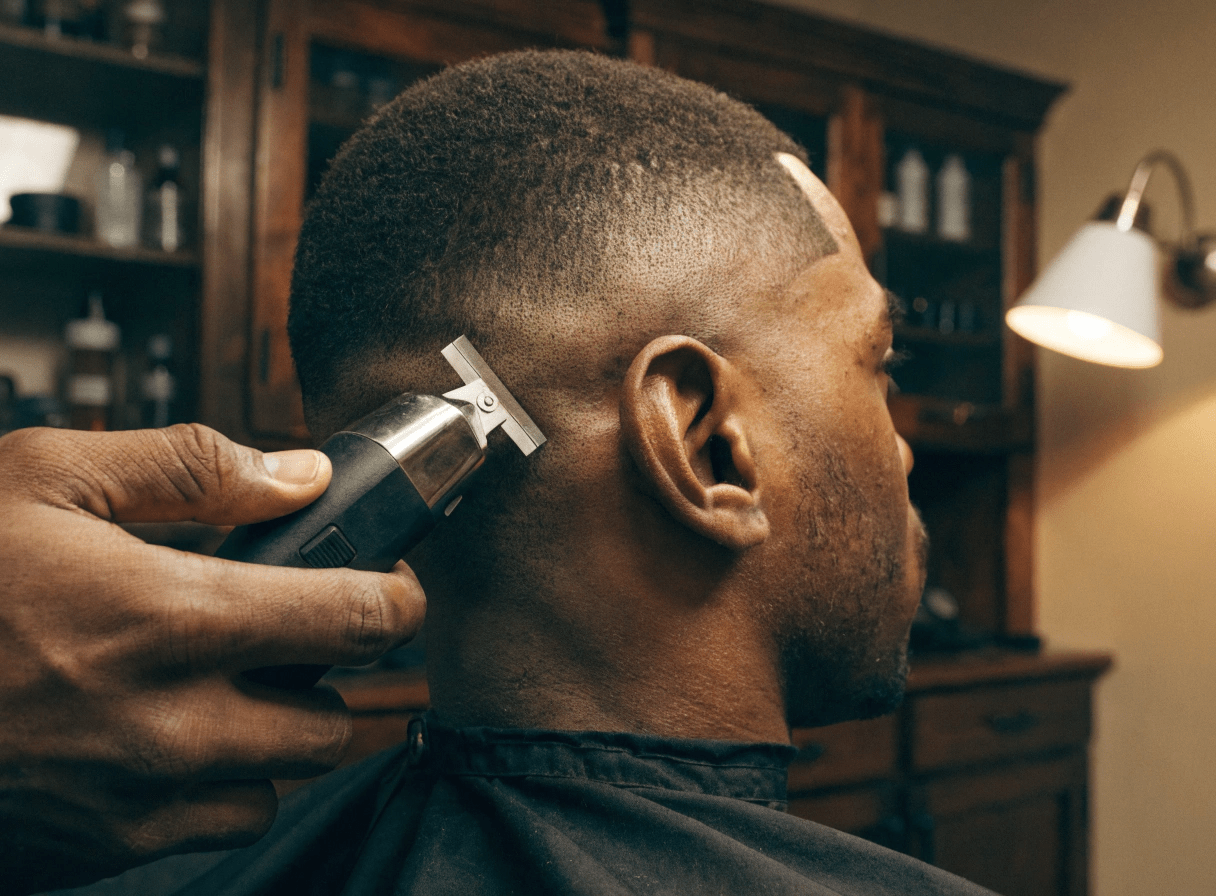
 A cordless detailer trimmer is a compact, battery-powered tool built specifically for close finish work that full-size clippers can't execute cleanly: hairline edge-ups, beard outlines, neckline cleanup, sideburn definition, and the skin-close transition zone at the base of a fade. The 'detailer' designation separates this tool from general-purpose precision beard trimmer for sharp lines category tools — it's optimized for one job: placing a precise edge on a precise line.
The T-wide blade is why the category exists
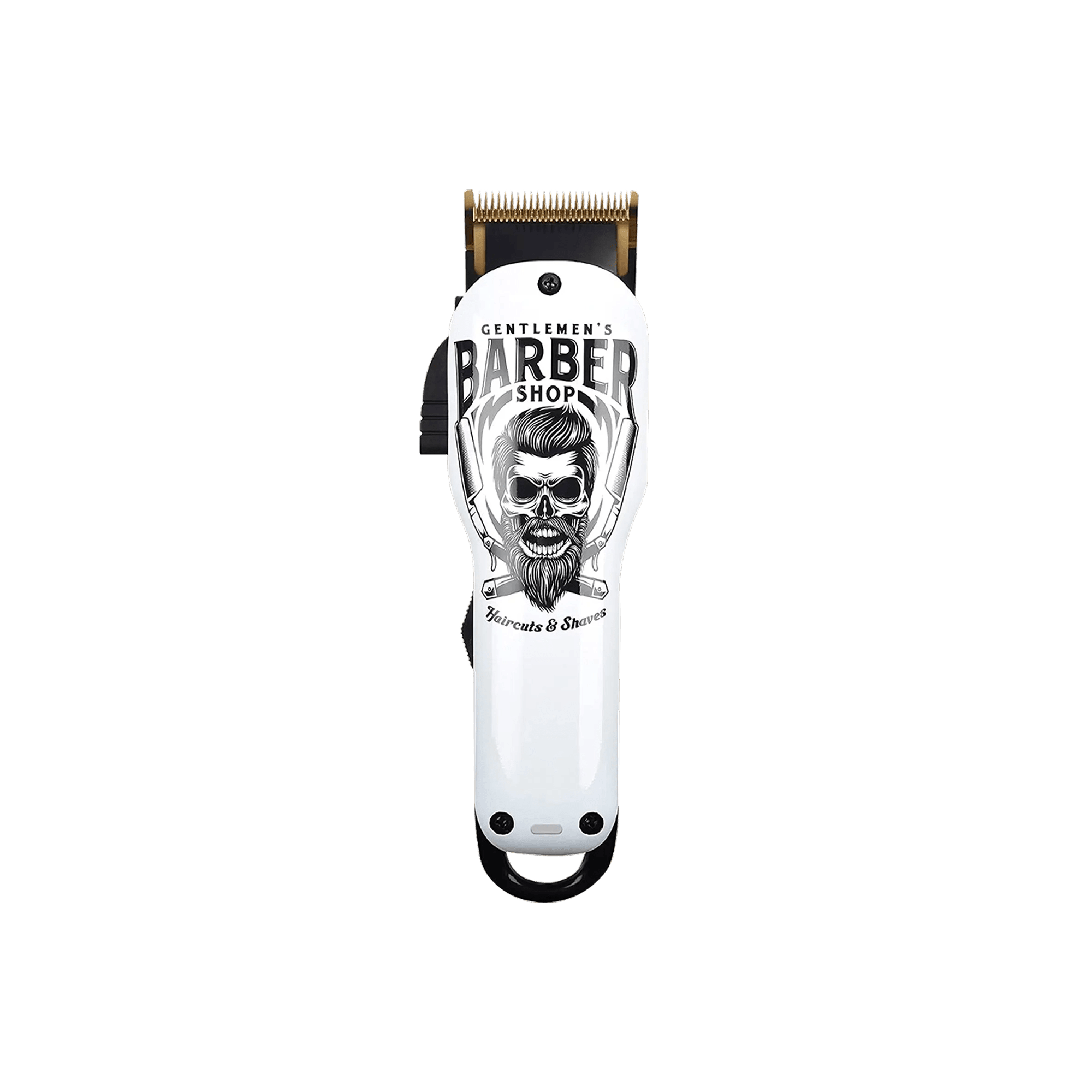
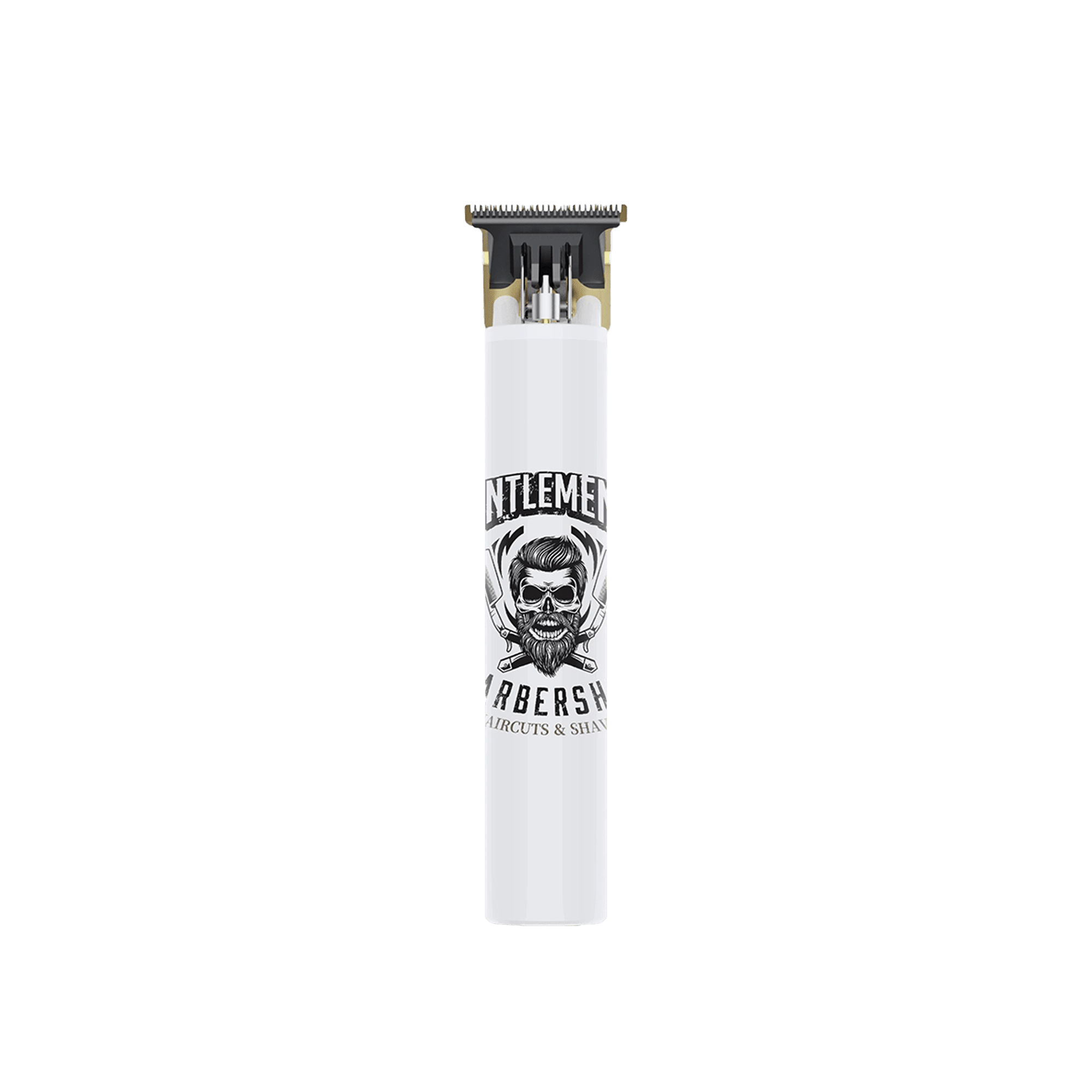
The defining feature is the T-wide blade. Unlike a standard trimmer blade that sits flush with the trimmer body, the T-wide blade extends wider than the housing on both sides — forming a T-shape when viewed from the front. This creates clear sightlines to exactly where the blade edge meets skin. When drawing a straight line across a forehead or defining a beard cheek line, that visibility is the difference between a crisp result and an approximated one.
Why 'cordless' matters for this specific tool type
The motion patterns required for detailing work — around the ear, upward at the neckline, across the forehead at various angles — don't work well with a cord. A cord that catches on your shoulder during a precision pass creates the small deviations that ruin the line. Most users who've switched from corded to cordless detailers report that the quality of their edge-ups improved immediately — not because of blade differences, but because the cord was no longer pulling the tool off the intended line.
|
What a detailer is NOT: A cordless detailer isn't a replacement for a regular trimmer or clipper. It's terrible at bulk removal. Using a T-wide blade to trim a full beard is slow and inefficient. The detailer is a specialist tool — it does one job very well and resists doing other jobs gracefully.
|
The T-Wide Blade: Why It's the Whole Point

The T-wide blade is worth its own section because it defines the detailer category. Professional barbers at the Wahl Detailer LI product page repeatedly cite the T-wide's visibility as the primary reason the tool produces results that a standard blade can't replicate for lineup and edge work.
With a standard trimmer blade, the housing extends to the same width as the blade. When you approach a hairline at close range — the last few millimeters before the line — the housing partially obscures your view of where the blade edge is sitting. You're working by feel for the final placement. With a T-wide, the blade extends past the housing. You can see the blade edge approaching the line from the front. The placement is visual and exact.
Zero-gap capability on T-wide blades
Most professional T-wide blades are designed to accept zero-gap adjustment — moving the blade forward until the cutting teeth are flush with the outer blade tips. At zero-gap, the trimmer cuts hair at the absolute minimum length: skin-close, shaved-looking rather than trimmed-looking. For skin fade finishing lines and ultra-sharp hairline edges, zero-gap is what makes the result look professional rather than merely maintained.
DLC and titanium coatings on premium T-wide blades
The Wahl Detailer LI Gold uses high-carbon steel blades with titanium and DLC (Diamond-Like Carbon) coatings. These coatings extend the edge life significantly over uncoated carbon steel, improve corrosion resistance, and reduce heat generation during cutting. For a tool used daily or frequently, coated blades are a meaningful quality upgrade over entry-level T-wide designs.
Cordless vs Corded Detailer: Which One Should You Buy?

For home users, cordless wins this comparison without much contest. Here's why the decision is clearer for detailers than it is for full clippers.
The battery technology argument
Modern professional detailers use lithium-ion batteries. LiIon maintains consistent motor speed and blade velocity until approximately 10–15% battery remaining, then drops noticeably. This matters for detailing specifically because blade speed consistency directly affects the quality of the cut: a blade that's running slower on one pass than another produces a slightly different result, which shows at hairline precision levels. LiIon battery management in premium tools keeps the power flat throughout a session.
The typical runtime — 60 to 100 minutes — is far more than a home user needs for any single session. A full edge-up takes 5–10 minutes. A home user doing touch-ups twice a week might use 15–20 minutes of battery time per week, which means one full charge lasts a week or more.
When corded still makes sense
Professional barbers doing 12–15 clients per day sometimes keep a corded detailer at the station specifically for the guarantee of never having a flat battery mid-service. A corded detailer on a charging stand stays at 100% between uses — no monitoring, no charging discipline required. The cord is a manageable inconvenience at a fixed station; it's a meaningful problem during self-cuts or mobile work.
|
Simple rule: If you're cutting at a fixed station where the outlet is nearby and you never move the trimmer far from the stand, corded works well. If you cut at a mirror, move around, or travel, cordless is clearly better.
|
What to Look for Before You Buy: A Feature Checklist

These six features separate a professional-quality cordless detailer from a consumer-grade one. Check every one before purchasing:
|
Feature
|
What to Look For
|
Why It Matters
|
|
T-wide blade
|
The blade extends wider than the housing on both sides, forming a T-shape
|
Visibility is everything in precision work. You can see the blade edge approach the hairline — the housing doesn't block your sightline at the critical moment.
|
|
Motor type
|
Rotary motor or full-sized clipper motor (not a weak nail-trimmer type motor)
|
Detail trimmers need to cut cleanly on the first pass, including through thick beard growth near the cheek line. A weak motor pulls instead of cuts.
|
|
Battery chemistry
|
Lithium-ion (LiIon), NOT NiCd or NiMH
|
LiIon maintains consistent power until depletion. Older battery types lose torque progressively — the blade speed drops mid-cut and the line goes soft.
|
|
Runtime
|
Minimum 60 minutes; 100+ minutes ideal for professionals
|
Most home edge-ups take under 10 minutes. 60 minutes is ample for home use. Professional barbers doing back-to-back clients benefit from 100+ minutes.
|
|
Blade adjustability
|
Adjustable taper lever or zero-gap capability
|
The ability to go to zero-gap extends the precision work the trimmer can do: skin-close fade lines, extremely fine hairline definition, and detail designs.
|
|
Weight
|
Under 8 oz preferred for detailing work
|
Precision requires a steady hand. A heavy trimmer causes hand fatigue during the controlled small strokes that edge-up work demands.
|
The most important item on this list is motor type. A trimmer that uses a lightweight consumer motor produces a different result from one using a full-sized clipper motor. The motor determines whether thick beard growth near the cheek line gets cut cleanly on the first pass or snags and requires multiple passes that create heat and friction.
Cordless Detailer Trimmer vs Standard Trimmer: When to Use Which

Many users try to make one tool do both jobs — and end up doing neither particularly well. Here's a clear breakdown of where each tool type wins:
|
Grooming Job
|
Cordless Detailer Trimmer
|
Standard Beard/Hair Trimmer
|
|
Hairline edge-up and lineup
|
Best tool for this job — T-wide blade visibility gives you precise placement on the hairline
|
Possible but difficult — housing blocks sightline at the critical moment, leading to approximate rather than precise placement
|
|
Neckline and nape cleanup
|
Excellent — close cutting at the neckline with full blade visibility
|
Also good — standard trimmer handles neckline cleanup well, though less precise on complex shapes
|
|
Beard outline (cheek line and jaw)
|
Ideal for sharp defined lines — T-wide corners follow curved contours clearly
|
Works for maintenance but less precise for initial shaping or sharp geometric lines
|
|
Beard length maintenance (bulk reduction)
|
Wrong tool — T-wide blade is narrow, requires many passes for bulk work, inefficient
|
Designed for this — guard attachments and wider blade cover large areas efficiently
|
|
Sideburn shaping
|
Best for precise sideburn geometry — see exactly where you're cutting
|
Fine for length control but imprecise on the bottom line definition
|
|
Body and chest grooming
|
Can work but inefficient — small blade, many passes needed for large areas
|
Better choice — wider blade, body-safe design, guard attachments for body grooming
|
The practical takeaway: own both for a complete home grooming setup. Use the standard trimmer for length maintenance and bulk work; use the cordless detailer trimmer for the final lines and edges. The cost of a quality detailer is separate from — and justified by — a completely different job that the standard trimmer can't do well.
How to Get Sharp Results Every Time

The right tool produces sharp results. The wrong technique ruins sharp results. Here are the most common mistakes in precision detailing work and what to do instead:
|
Common Mistake
|
Better Approach
|
|
Drawing the full hairline in one long pass — commits to the line before you've verified the angle
|
Short overlapping strokes of 1–2 cm each. After each mark, check the line and adjust direction before the next stroke. Correct as you go, not after.
|
|
Using the trimmer on wet or oily skin — hair clumps, the line looks blurry, and the blade contact is uneven
|
Clean and dry skin before any precision work. Wash your face, dry completely. The blade needs to contact each hair individually for a clean cut.
|
|
Heavy hand pressure trying to 'push through' thick hair — causes blade drag and uneven edges
|
Light, consistent contact. Let the motor do the cutting. If the blade snags, the motor is too weak for the hair type or the blade needs oiling — not more pressure.
|
|
Using the edge-up trimmer for beard bulk removal — T-wide blade is too narrow for efficient large-area work
|
Use a full-size clipper or standard beard trimmer for length reduction first. The detailer is the finishing tool, not the starting tool.
|
|
Not using a guideline or mirror for the cheek line — creates an asymmetric result on opposite sides
|
Use a pencil or comb as a guide for the first pass, then verify both sides match before removing the guide. Two-mirror setup for neckline work you can't see directly.
|
The short stroke method in detail
Most people treat an edge-up like drawing a line with a ruler: one smooth pass from end to end. In practice, a long smooth pass commits you to the angle set at the start of the stroke. If that angle was slightly off, the whole line is slightly off. The short stroke method — 1–2 cm marks, check, adjust — treats the line as a series of small decisions rather than one big one. You correct at every step instead of fixing afterward.
The corner of the T-wide blade is the precision instrument in this method. You're using approximately 5–10 mm of blade width on each mark, not the full blade. This gives you maximum control over placement and allows the clear inner corner sightline of the T-wide to be the guide.
Maintaining a Cordless Detailer for Long-Term Precision

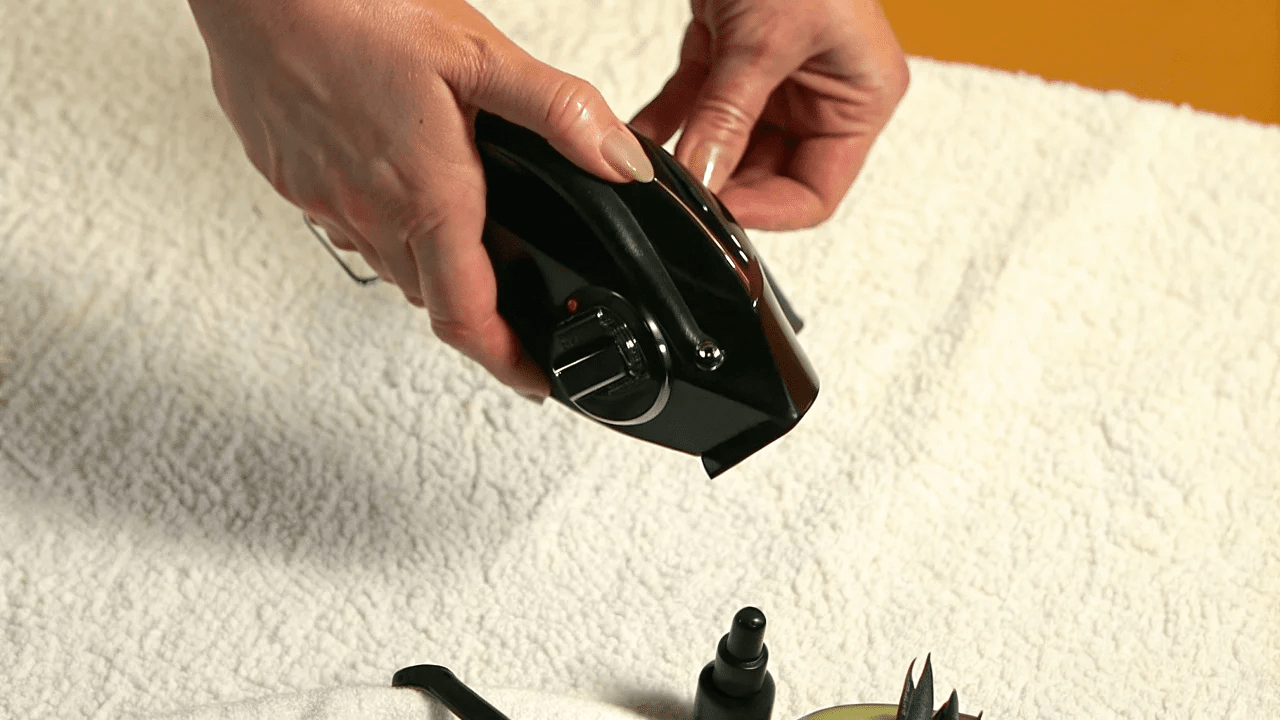
The T-wide blade's extended corners collect hair debris at the points where the blade reaches past the housing. These corners are easy to miss when brushing down the blade and should be cleaned specifically after each use. Brush from the center of the blade outward toward each corner — not just front-to-back. For the full cleaning and oiling routine, see oil for hair clippers (what to use & how).
Oiling the T-wide blade correctly
Apply oil at three positions across the full blade width: left corner, center, and right corner. Apply 1–2 drops at each position — not a generous pour at the center only. Run the trimmer for 10 seconds to distribute. The blade corners are where most of the detailed work happens; they need oil coverage as much as the center.
Blade alignment check
A T-wide blade that has shifted slightly out of alignment produces an uneven cut width — one corner of the blade cuts while the other misses. Check alignment monthly or after any impact: the outer teeth of the cutting blade should be even with the outer teeth of the fixed blade across the full width. Any asymmetry means the blade has shifted. Loosen the blade screws, realign, and retighten.
When to replace
The signal: the trimmer stops producing a clean line on the first pass and starts requiring multiple passes over the same area. On thick beard hair near the cheek line, snagging instead of cutting means the blade is dull or the blade gap has drifted. Clean, oil, and check alignment first — these solve the problem 70% of the time. If it persists, the blade needs replacement.
Bestbomg Cordless Detailer Options
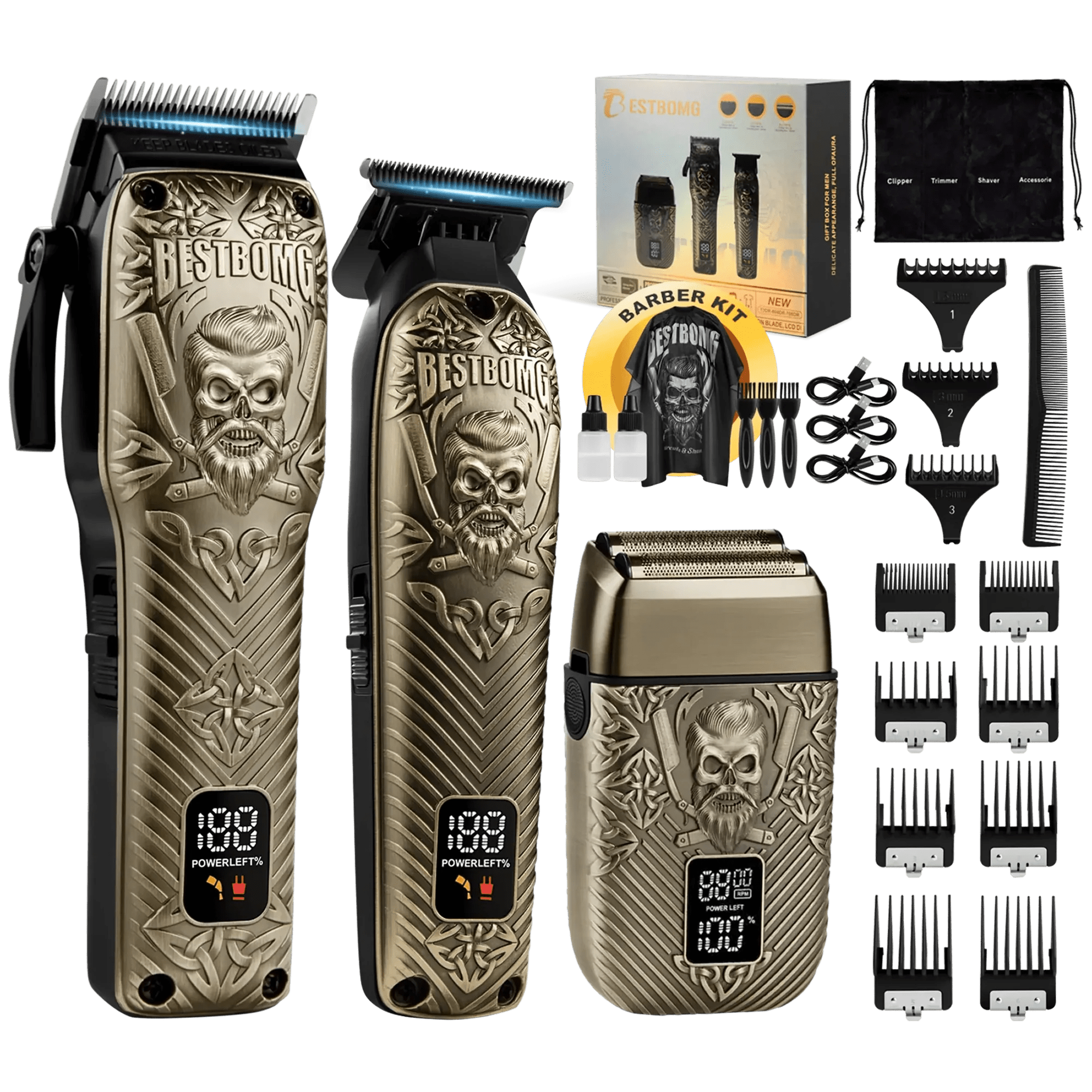
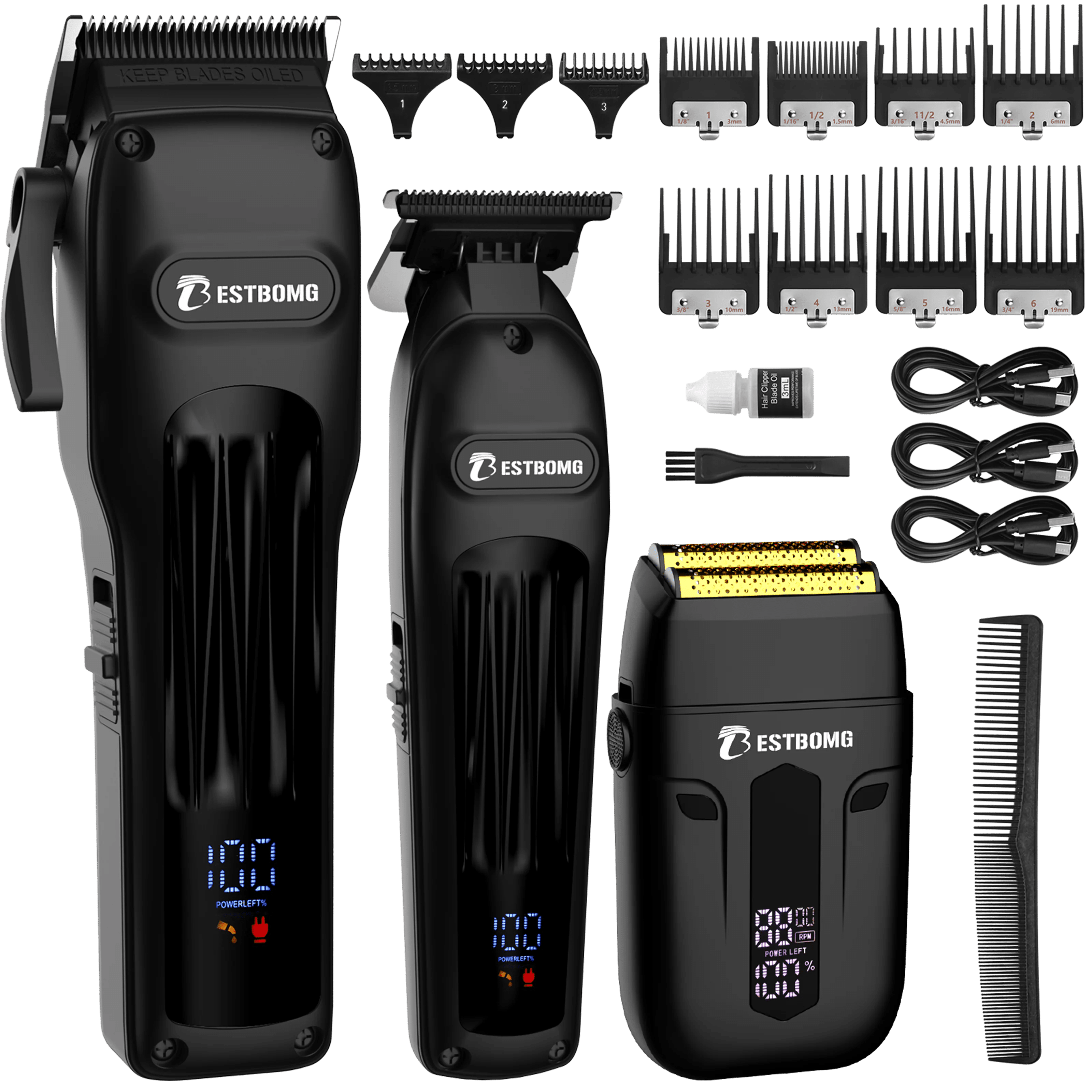
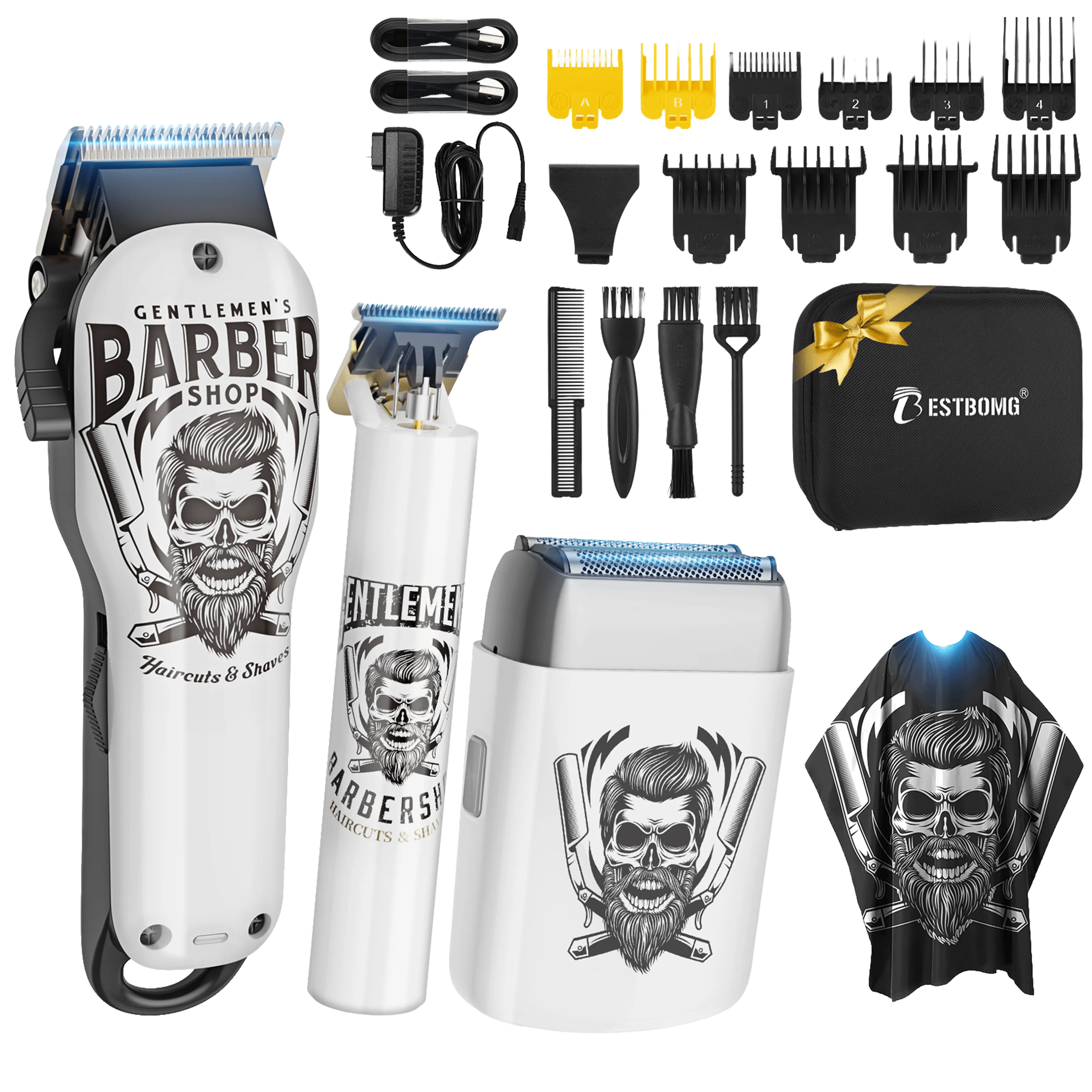
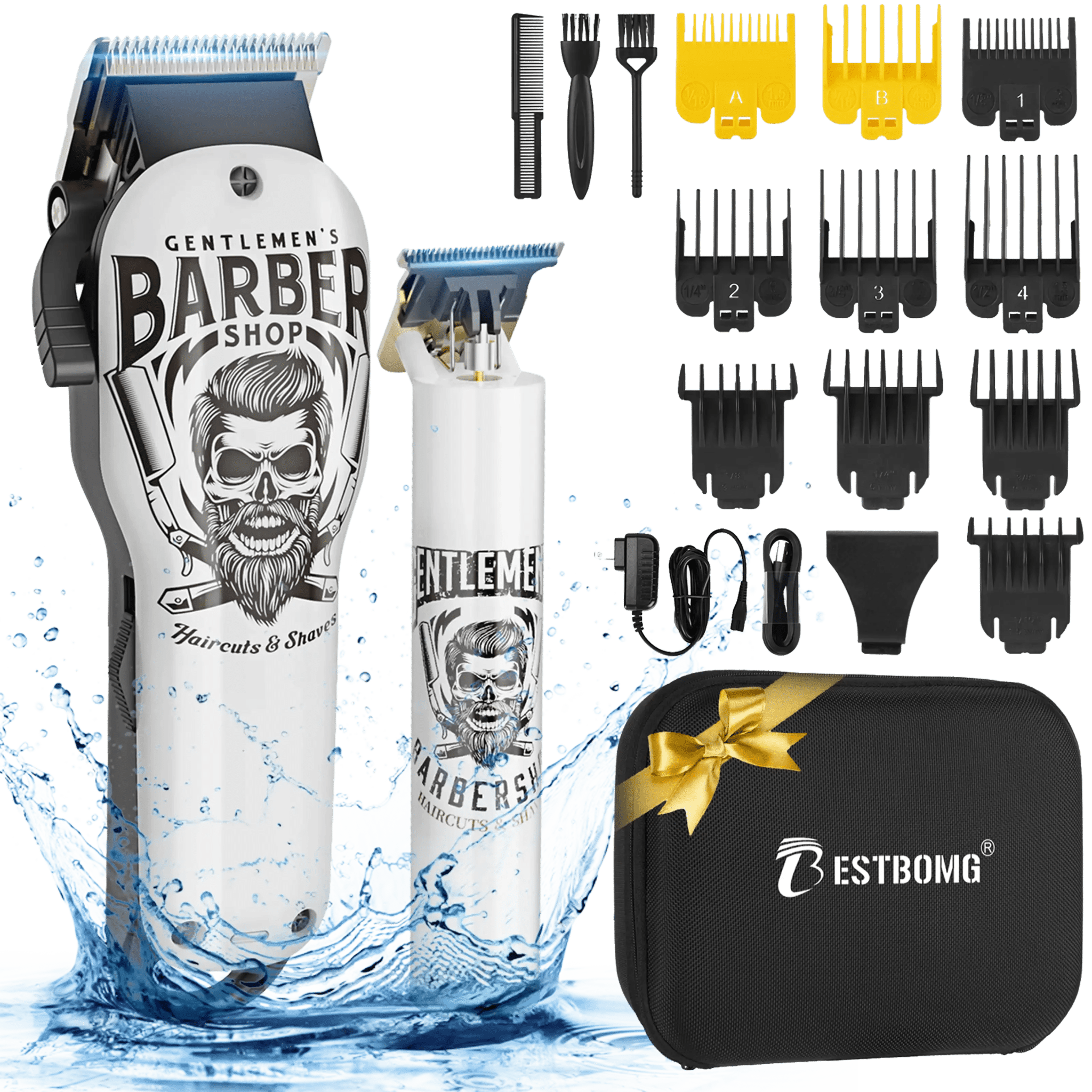
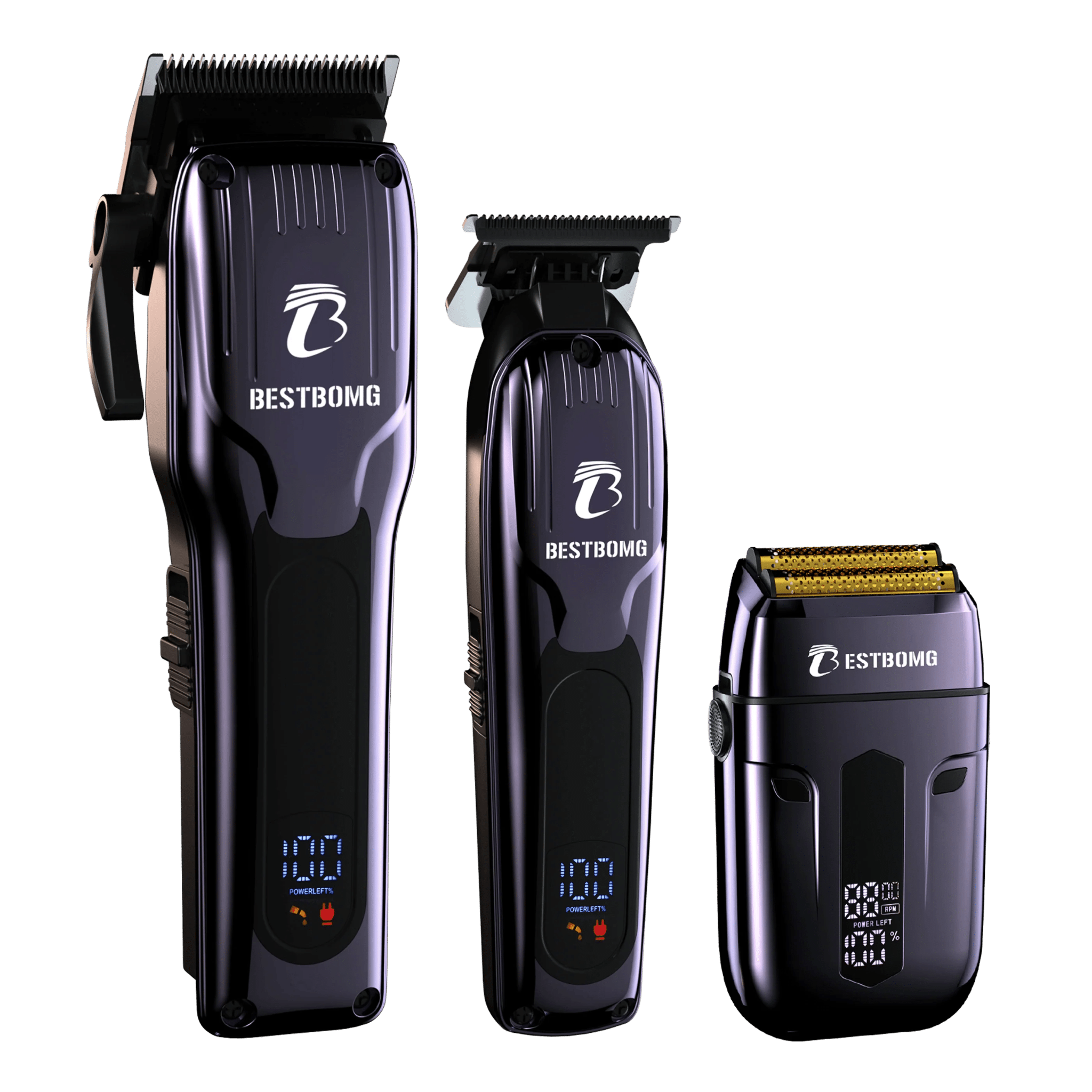
For home users who want the T-blade visibility and precision of a professional cordless detailer without the premium brand price, Bestbomg's detail trimmer for crisp outlines — the T9 beard trimmer — is built around the same principle: exposed T-blade design, lightweight body, and cordless operation for lineup and edge work at home or in a mobile setup.
The T9 is positioned as a practical alternative for users who need clean hairline edges and beard outlines without the professional markup. Free US shipping and 12-month warranty. It's the detail work tool that fits the reality of home grooming: affordable, properly designed for the job, and ready to use with the short-stroke technique described above.
Conclusion
A cordless detailer trimmer is a single-purpose specialist tool, and that's exactly what makes it worth owning. General-purpose trimmers and clippers can't replicate what a T-wide blade does at close range on a hairline. The visibility, the precision control, and the mobility of a well-built cordless design are what turn a passable home grooming routine into one that actually holds up at close range.
The buying decision isn't complicated once you know what to look for: T-wide blade, LiIon battery with real runtime, a motor that handles thick growth, and a body light enough for steady hand work. Everything else is secondary.
Browse the Bestbomg beard trimmers and detail trimmer range to find cordless detailer options sized and priced for the home grooming setup.
FAQs
What is a detailer trimmer used for?
Precision edge work: hairline lineups, beard cheek line definition, neckline cleanup, sideburn shaping, and the skin-close finishing zone in a fade. A detailer is a finishing tool, not a length maintenance tool.
What is the difference between a detailer and a trimmer?
A trimmer is a broad category. A detailer is a specific type of trimmer with a T-wide blade designed for skin-level contact and sharp edge placement. Standard trimmers are optimized for maintenance cutting across larger areas; detailers are optimized for precise edge work at skin level.
Are cordless hair trimmers good?
Modern cordless trimmers with LiIon batteries are excellent — they maintain consistent blade speed and power throughout the session until the battery is nearly depleted. The performance difference between cordless and corded has largely disappeared on premium models. Cordless adds mobility and removes cord interference from precision work.
Can I use the detailer cordless for beard trimming?
Yes for beard outline and edge work — it's actually the best tool for the cheek line, neckline, and sideburn definition. Not ideal for beard length maintenance or bulk reduction — use a standard trimmer or clipper for that first, then finish the edges with the detailer.
What are the pros of a cordless detailer?
Mobility during precision passes, no cord interference when working at angles around the ear and neck, the same LiIon battery technology as corded tools (on premium models), and the T-wide blade design that makes close edge placement visually accurate rather than approximate.
Is the Wahl Detailer a trimmer?
Yes — specifically a T-wide blade outliner/detailer trimmer. The Wahl Detailer is the tool that established the T-wide blade as the professional standard for precision edge work. The cordless Li version maintains the same blade design on a lithium-ion platform for untethered use.
What is the 3-month beard rule?
A guideline suggesting you grow your beard for 3 full months before any significant shaping — to let it fill in fully and reveal its natural growth pattern. After 3 months, use a detailer trimmer to define the cheek line and neckline based on what actually grew in, rather than guessing at the ideal shape from week one.
Which is better — cordless or electric trimmers?
'Electric' trimmers include both corded and cordless — both are electric. The comparison is cordless vs corded. For home detailing and self-cuts, cordless is better because the mobility reduces cord interference during precision passes. For a fixed professional station with consistent power needs, corded is a valid choice for never managing battery levels.
Sources
- Wahl Professional — Detailer LI Gold 5-Star Series (titanium and DLC-coated T-wide blade, full-sized clipper motor, 100+ minute runtime, and zero-gap capability), wahlpro.com, July 23, 2021.
- VIP Barber Supply — Wahl Cordless Detailer LI Trimmer (professional barber supply listing with detailed feature breakdown including LED indicator, swivel cord stand, and kit contents), vipbarbersupply.com, June 5, 2025.
- Cosmoprof Beauty — Cordless Detailer LI (professional salon supply context: extremely close T-wide blade, 100-minute lithium-ion battery, heavy-duty recharging stand), cosmoprofbeauty.com.
- Wikipedia — Hair clipper (overview of clipper and trimmer blade types, motor designs, and the history of T-blade development in professional barbering tools), wikipedia.org.

Looking for something else?

How to Cut Baby Boy Hair with Clippers: Step-by-Step Guide
LEARN MORE
Do Hair Clippers Get Dull? Causes, Signs & Prevention
LEARN MORE
Can an Electric Shaver Cut You? Safety Facts & Prevention
LEARN MORE
How to Shave Balls with Electric Shaver: Safe Guide
LEARN MORELooking for something else?

Does Using Trimmer Increase Hair Growth? Facts & Myths
LEARN MORE
Best Hair Clippers for Men: Top Picks for Home & Pro Use
LEARN MORE
Best Professional Hair Clippers for Barbers: Top Picks
LEARN MOREYou may also like


Electric Shaver Y4
$25.99


Y4T9 Easy Start Kits
$37.50
$49.99
Further reading
Best Hair Clippers for Perfect Fades at Home
Fading well at home takes a specific kind of clipper — one with a reliable taper lever, a blade designed for blending rather than just bulk cutting, and enough motor consistency to maintain clean ...
Clipper Lever Open vs Closed: What It Means (with mm)
The lever on a hair clipper is one of the simplest mechanical features on the tool and one of the most consistently misunderstood. Clipper lever open vs closed determines actual cutting length — h...
Why You Need a Cordless Detailer Trimmer (And How to Pick the Right One)
A standard clipper does bulk work. A cordless detailer trimmer does finish work — and the two are not interchangeable. The last 10% of a haircut is what separates 'looks like a home cut' from 'loo...
How to Get a Crisp Line Up at Home (+ Best Trimmers)
A crisp line-up is one of the fastest, highest-impact grooming upgrades you can do at home — and one of the most commonly botched. The wrong tool gives you blurry edges. The right technique with t...


