





T-Blade vs Regular Trimmer: What's the Difference?
The blade on a trimmer determines more about the result than most grooming guides acknowledge. T-blade trimmer vs regular trimmer isn't just a style question — it's a function question. These two blade types are designed for different jobs, and using the wrong one costs time, results, or both.
This guide explains the mechanical difference between the two designs, where each one has a clear advantage, and how to choose the right tool for the work you actually need to do — whether that's sharp hairline edges, general beard maintenance, or something in between.
What Is a T-Blade Trimmer?

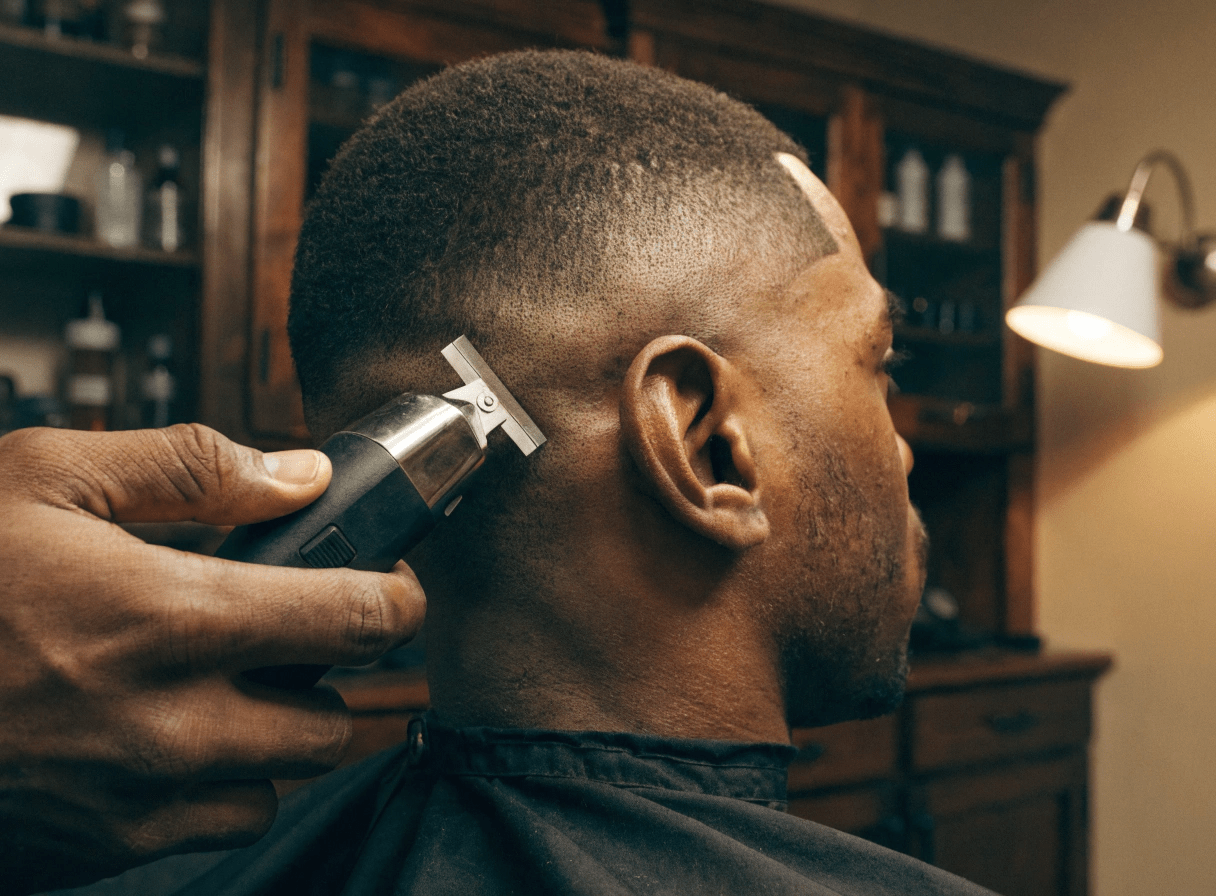
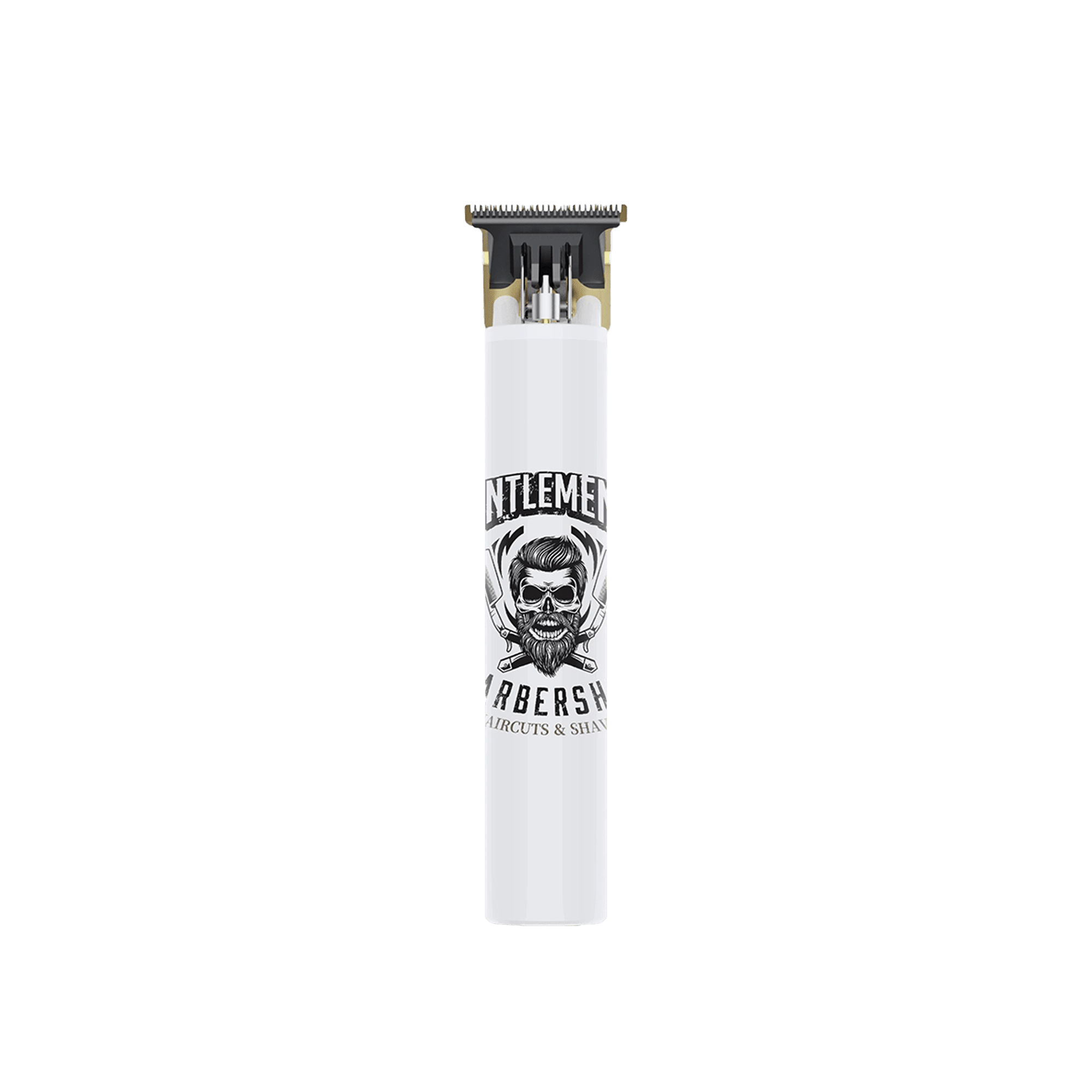
A T-blade is named for its shape. The cutting assembly extends wider than the trimmer body on both sides, forming a visible T when viewed from the front. That wider-than-handle design isn't aesthetic — it's functional. The blade width typically reaches 55–65 mm on professional models, while the handle is narrower. A T-blade trimmer for edging exists specifically because this shape solves a visibility problem that standard blades create.
Why the extended blade shape matters
When the blade extends past the handle, you can see exactly where the blade edge meets the skin. The housing doesn't obstruct your sightline. For outlining work — where a fraction of a millimeter determines whether a hairline looks clean or ragged — that visibility is the defining advantage of the T-blade design. You're drawing with the blade corners, and you can see the line you're drawing as you draw it.
Standard blades sit flush with the housing. On a regular trimmer, the outer casing blocks your view when you're placing the blade precisely on a hairline, especially at the corner where the temple meets the ear. The result is an outline that's approximate rather than exact.
Where T-blades are used in professional barbering
T-blades are the standard on dedicated outliner tools and detail trimmers. They're the blade type barbers reach for at the finishing stage of a cut — not for the structural work, but for everything that makes the result look sharp at close range. Edge-ups, neckline definition, sideburn detailing, and the skin-fade finishing line all require this level of placement accuracy. The Andis T-Outliner is probably the most widely recognized example in professional shops, but the design principle applies across brands. The history of clipper blades traces the T-blade format's development into the standard professional outlining tool it became.
What Is a Regular Trimmer?

A regular trimmer — sometimes called a standard blade, straight blade, or U-blade — sits flush with the width of the trimmer's body. The cutting surface is roughly as wide as the handle. This is the blade design on most beard trimmers, multipurpose grooming tools, and the majority of consumer-grade trimmers.
Designed for coverage, not placement
The flush-with-handle design means the outer casing works as a natural buffer during use. The blade corners don't reach into spaces beyond the housing's footprint, which reduces the risk of catching sensitive skin on angular passes. For maintenance trimming — keeping a beard at a consistent length, reducing bulk on larger areas, general body grooming — this is the appropriate tool design.
Regular trimmer blades are also typically wider in absolute terms: most consumer models cut at 40–55 mm. That wider cutting surface means more hair removed per stroke. Maintaining a uniform 5mm beard length across a full cheek takes roughly half as many passes with a standard blade as with a T-blade. For that kind of work, the standard blade's efficiency is the right trade-off.
The versatility advantage
Regular trimmer blades handle everything from short stubble to longer beard maintenance, body hair, and chest grooming. Most consumers who buy a trimmer for general use are best served by a standard blade because the majority of grooming tasks are about maintenance — not precision detailing. For a fuller overview of how different trimmer types fit different grooming needs, see the guide on types of trimmers for men you should know about.
Blade Anatomy: How They Compare Feature by Feature

The shape difference between these two blades produces different results in every aspect of use. This comparison covers the key mechanical features:
|
Blade Feature |
T-Blade |
Regular (Standard) Blade |
|
Blade width vs. housing width |
Extends wider than the handle body on both sides, forming a visible T-shape |
Flush with or slightly narrower than the handle body — blade and housing move as one unit |
|
Typical blade width |
55–65 mm on professional models; the "ears" extending past the handle provide corner visibility |
45–55 mm on most consumer trimmers; the full width is cutting surface, no extension |
|
Sightline during use |
Clear — the extended blade sits in front of the housing, so you see exactly where the blade edge meets skin |
Partially obstructed — the housing can block your view when placing the blade at tight angles |
|
Ideal cutting motion |
Precision placement and short directional strokes; the corners are used for outlining around curves |
Broad strokes across larger surfaces; the full blade width covers more hair per pass |
|
Primary use case |
Hairline edge-ups, beard outline, neckline, sideburn definition, skin fade finishing |
Beard length maintenance, body grooming, bulk reduction, general facial hair upkeep |
|
Skin contact risk |
Higher at the blade corners — the extended edges can dig into skin if pressure or angle is wrong |
Lower — the housing acts as a natural buffer during broad-stroke maintenance trimming |
|
What this means practically: The T-blade's extended corners are precision instruments. The regular blade's flush design is a safety feature. Neither is inferior — they're optimized for different jobs. |
T-Blade vs Regular Trimmer: Which One to Use When

The most useful way to compare these tools is by task, not by specification. Here's the job-by-job breakdown:
|
If your main task is this... |
Use this blade type |
|
Outlining a beard's top line or cheek line |
T-Blade — you need to see exactly where the blade is |
|
Defining the hairline at the temples or nape |
T-Blade — the extended corners navigate tight curves |
|
Maintaining beard length (trimming to 5mm, 7mm, etc.) |
Regular Trimmer — faster, more consistent over large areas |
|
Chest, back, or leg hair grooming |
Regular Trimmer — safety and speed matter more than precision |
|
Skin fade finishing (below the zero-gap line) |
T-Blade — closest finish without a razor, best at skin level |
|
Stubble maintenance (3-day or 5-day look) |
Regular Trimmer — one guard setting, even results, fewer passes |
|
Sideburn detailing and temple clean-up |
T-Blade — the corners reach areas the housing would block |
|
Weekly all-over beard tidy |
Regular Trimmer — more versatile for the full grooming session |
The pattern in the table is consistent: T-blade for anything where placement matters more than coverage, regular trimmer for anything where coverage and maintenance efficiency matter more than precision.
T-Blade Strengths and Weaknesses

Where T-blades genuinely win
The T-blade is the best tool available for hairline edge-ups, beard top-line definition, and neckline outlining. The extended blade corners navigate tight areas — around the ear, at the corner of a mustache, along the curved temple line — without the handle body getting in the way. No other blade design provides the same combination of visibility and corner precision for this work.
Zero-gapping is also more predictable on a T-blade. The extended blade gives more visual feedback during alignment, and the result at skin level is closer than what a standard blade achieves. That's why barbers use T-blades specifically for the skin-fade finishing pass — a properly aligned T-blade at zero gap produces a line that looks shaved rather than trimmed.
The T-blade and square blade comparison from Bevel's support documentation illustrates this difference clearly — the T-blade covers more surface area on angular cuts precisely because the extended shape follows curves without the housing blocking the angle.
Where T-blades fall short
Bulk trimming. A T-blade used for general beard maintenance is the wrong tool for the job. The narrow blade height means significantly more passes across the same surface to achieve even results. Maintaining a consistent 5mm length across a full beard with a T-blade takes noticeably longer than the same task with a standard blade and a guard — and the risk of uneven length is higher because each pass covers less area.
Body grooming is worse still. Trimming chest or leg hair with a T-blade is possible but slow and uncomfortable. The extended corners catch on skin in ways that a standard blade's flush housing design prevents.
Regular Trimmer Strengths and Weaknesses

Where regular trimmers genuinely win
Volume, efficiency, and safety across large areas. Beard length maintenance, chest hair, leg grooming, general body hair — all of these tasks involve moving the blade across large surfaces repeatedly. The wider cutting profile removes more hair per pass. The housing-flush design reduces the chance of the blade corners catching on skin during broad strokes.
Most consumer trimmers ship with standard blades because most consumer grooming is maintenance-oriented. The weekly beard tidy, the pre-travel cleanup, the monthly body grooming session — these are regular-blade tasks. The standard blade is also more forgiving for beginners because the housing controls how close the blade gets to skin in a way that the T-blade's extended corners don't.
Where regular trimmers fall short
The edges. When you need to place the blade precisely on a hairline — especially in the corner where the temple meets the ear — the housing obstructs your view and the blade's position becomes approximate. This is the 'blind spot' problem that experienced barbers mention when explaining why they switch to a T-blade for outline work. The result is a lineup that's acceptable from a distance but doesn't hold up to close inspection.
Clean geometric lines are also harder with a standard blade on a trimmer, even when you can see what you're doing. The flush-with-housing corners don't create the sharp line the T-blade corners produce because the cutting geometry is different — the T-blade corners are designed specifically to create a perpendicular, clean-cut line at the blade's outermost edge.
When to Use a T-Blade Trimmer vs a Regular Trimmer

T-blade: when the job is about placement, not coverage. Outlining a beard's top line. Defining the hairline at the temples. Cleaning the neckline below the natural growth line. Creating the skin-fade finish below the zero-gap line. Any task where the difference between 1mm left and 1mm right changes the result visibly.
Regular trimmer: when the job is about efficiency, safety, or maintenance. Trimming beard length to a specific guard setting. Reducing bulk before styling. Body grooming. Weekly maintenance cuts where you're maintaining an established shape rather than creating new lines.
The professional answer is to own both and use each where it excels. Most working barbers have a T-blade outliner for the edges and a standard-blade clipper or trimmer for structural work. Using only a T-blade for everything is possible but slow; using only a standard blade for everything is possible but imprecise at the edges.
|
Who benefits from T-blades at home: Regular home shavers who maintain their own hairline or beard edges. If you're doing touch-up edge work between barbershop visits, a T-blade trimmer makes that work significantly easier and cleaner. |
Can You Use a T-Blade Trimmer for a Beard?

Yes — for the right parts. A T-blade works well for the edges of a beard: the top line along the cheeks, the bottom line at the neck, and the corners around the ears. For these tasks it's actually better than a regular blade because you have better visibility of exactly where you're cutting.
For maintaining beard length — reducing a 10mm beard to 7mm, keeping a stubble look consistent — a T-blade is inefficient. The narrow blade-height profile means significantly more passes over the same area. Maintaining uniformity across a full beard with only a T-blade requires real attention and patience that the same task done with a standard blade and a guard doesn't.
The practical answer: use a T-blade at the edges, and use a detail trimmer for crisp outlines or a standard trimmer with a guard for length maintenance. These are different tasks requiring different blade designs. For most users, a complete beard grooming session uses both tool types — standard blade for the length, T-blade for the definition.
Maintenance: Keeping Both Types Sharp and Clean

The fundamental care routine is the same for both blade types. Brush hair debris from the blade teeth after every use. Apply oil before first use and after every cleaning. For the full routine, see oil for hair clippers (what to use & how) — the oiling principles apply to both T-blade and standard blade designs.
|
Both T-Blade and Regular Trimmer |
T-Blade Only — Extra Step |
|
Brush hair debris from blade teeth after every use Apply 2–3 drops of clipper oil before the first use and after every cleaning session Disinfect (spray or Barbicide soak) before the next client or session Replace blade or trimmer when cutting action becomes pulling rather than cutting |
Clean specifically at the blade corners — the extended "ears" trap hair where the blade extends past the housing, which is easy to miss with a standard brush pass After zero-gap adjustment: re-oil immediately and run for 10 seconds before the first cut — the adjustment increases friction at the blade contact surface Check blade alignment after every deep clean — T-blade screws can shift slightly when blades are removed and reattached |
Blade material considerations
Both T-blades and regular blades come in stainless steel, carbon steel, titanium-coated, and ceramic variants. The choosing the right clipper blade material guide covers these options in detail. The short version: stainless steel is the most common and most forgiving for general use; carbon steel is sharper but requires more maintenance to prevent rust; titanium coatings extend edge life; ceramic runs cooler and suits sensitive skin. Blade material affects durability and maintenance frequency, but it doesn't change the fundamental T-blade vs standard design trade-offs.
When blades need replacing
Both blade types dull with use. The timeline varies by frequency and blade material, but the signal is the same regardless of blade type: the trimmer starts pulling hair rather than cutting it cleanly. Pulling causes friction, heat, and skin irritation in ways that sharp blades don't. A blade that consistently pulls should be cleaned and oiled first — that resolves the problem most of the time. If pulling continues after oiling and cleaning, replace the blade or the tool.
For professional use: evaluate blades at 6–12 months depending on how frequently they're used. For home use: typically 12–18 months before performance noticeably drops.
Conclusion
T-blade vs regular trimmer isn't a question with a universal answer. It's a question about which job you're doing. T-blades exist for precision placement: hairline edges, beard outlines, neckline definition, skin-fade finishing. Regular blades exist for efficient coverage: beard length maintenance, body grooming, bulk reduction.
For most people, the complete answer is a standard trimmer for everyday maintenance and a T-blade trimmer for the edge work. These two tools complement each other rather than compete. If you can only own one, the choice is determined by which task you do more of.
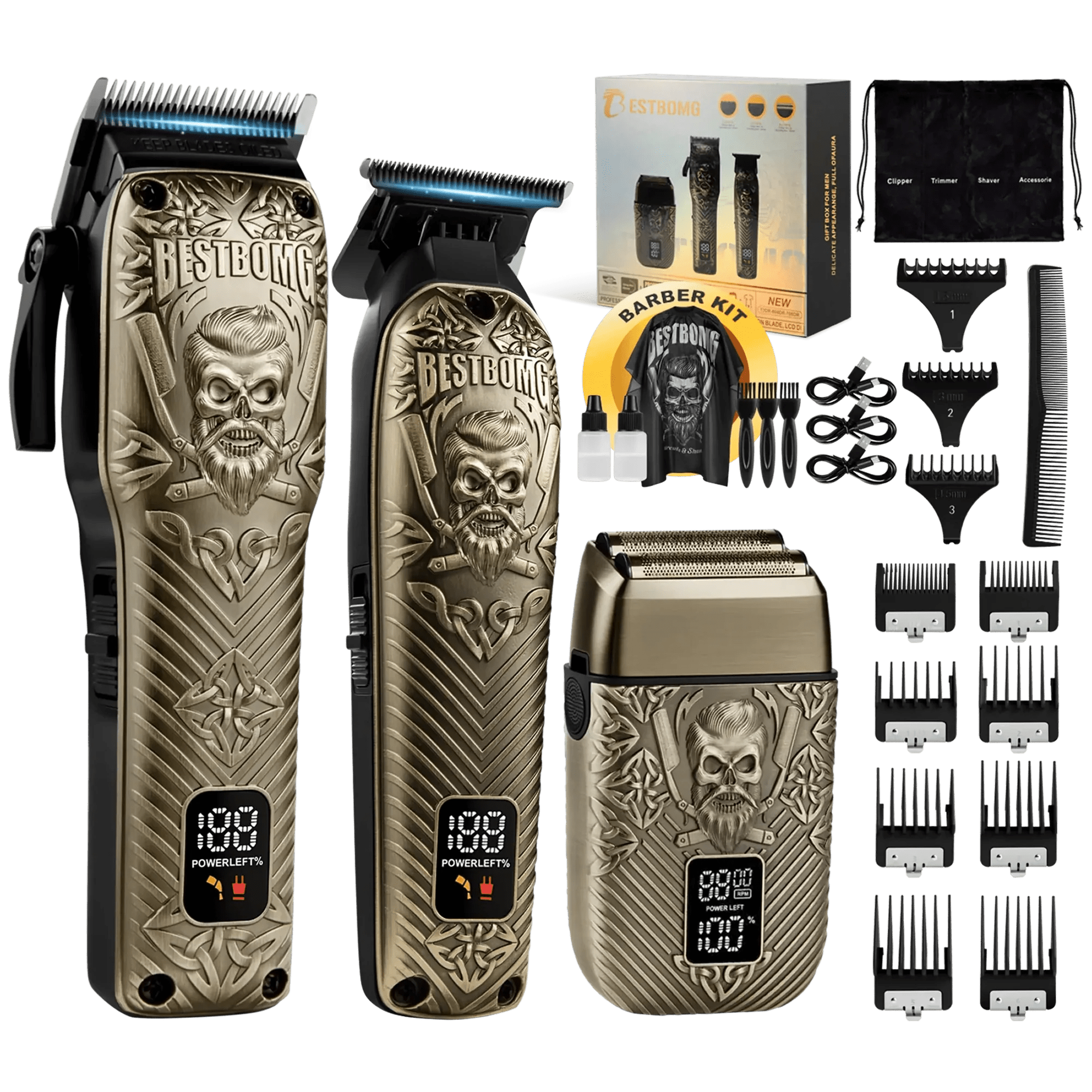
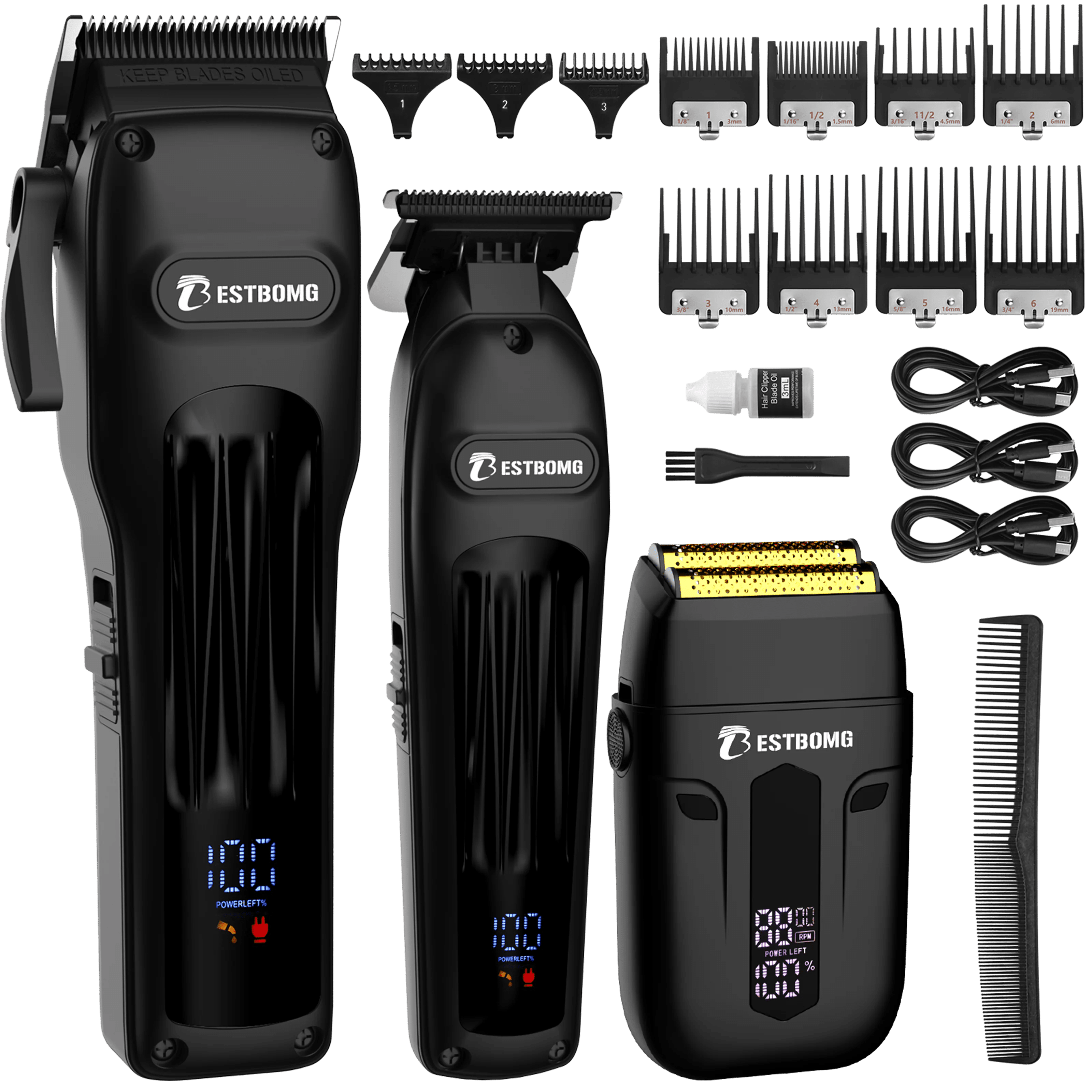
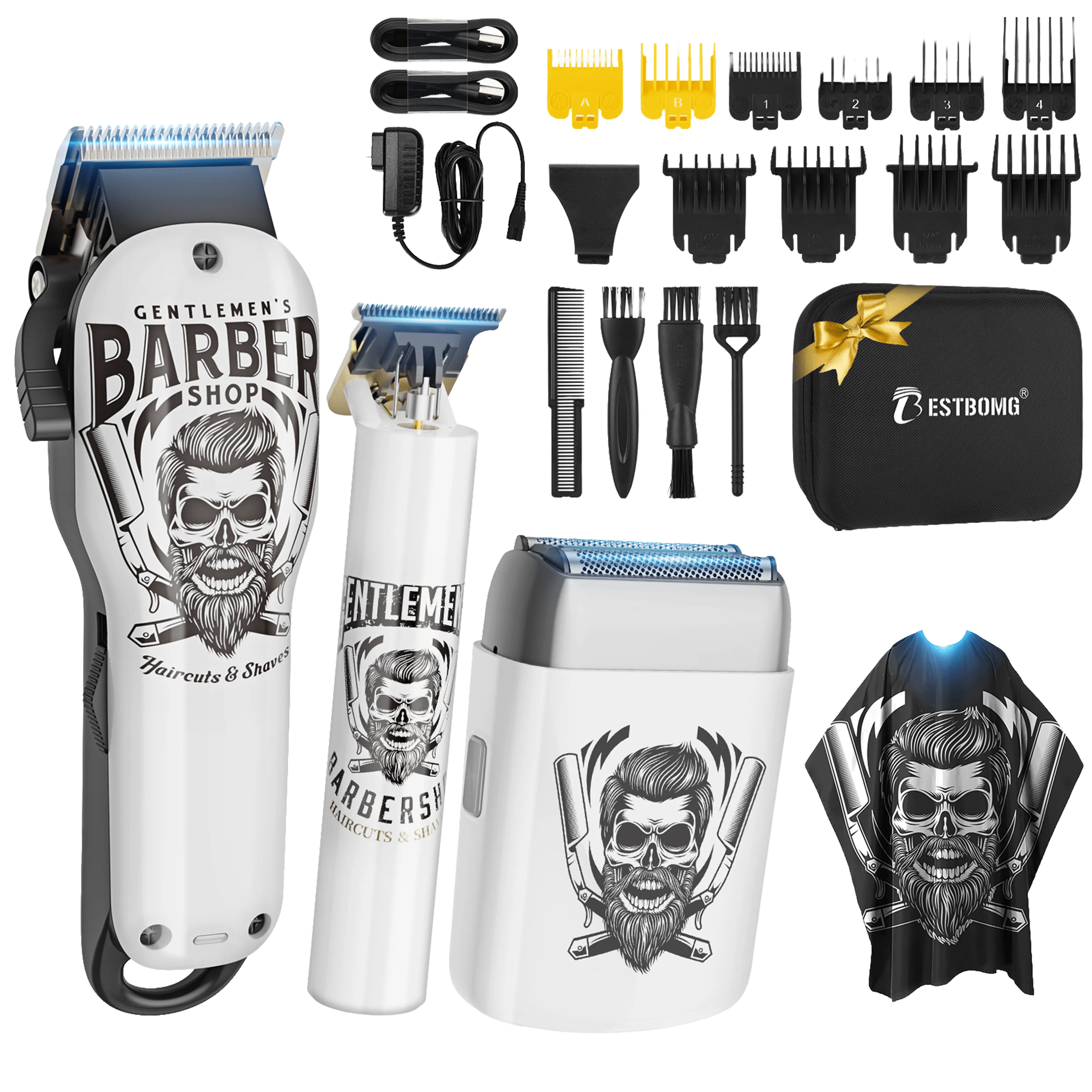
Browse the Bestbomg beard trimmers and detail trimmer range to compare T-blade and standard-blade options — both types are stocked with the professional build quality that makes the difference between clean results and recurring frustration.
FAQs
What is the difference between a trimmer blade and a T-blade?
A standard trimmer blade sits flush with the trimmer housing — the blade and handle are roughly the same width. A T-blade extends wider than the housing on both sides, creating a T-shape that improves visibility and allows the extended corners to outline with precision.
What is the use of a T-blade in a trimmer?
Precision detailing work: hairline edge-ups, beard top-line definition, neckline outlining, sideburn shaping, and skin-fade finishing. The extended blade corners provide visibility and placement accuracy that standard blades can't match for this kind of work.
What is the difference between T-blade and U-blade trimmers?
U-blade or standard blade trimmers have a rectangular or slightly curved blade that sits flush with the housing. T-blades extend past the housing. The U-blade is designed for broad-stroke maintenance; the T-blade is designed for precision outlining. On beard trimmers that offer interchangeable blades, both can attach to the same body.
Is a blade or a trimmer better for beard grooming?
For beard maintenance — trimming to a consistent length — a standard trimmer with a guard is better. For beard outline definition and edge work — the sharp lines along the cheeks and neck — a T-blade trimmer is better. Most complete beard grooming routines use both.
Can I use a T-blade trimmer for a beard?
Yes for the outline and edges. Less efficiently for length maintenance across the full beard. A T-blade produces cleaner edge definition than a standard blade, but covering the full beard surface for length trimming takes more passes and more attention. Use a standard guard-equipped trimmer for the length, T-blade for the lines.
Do trimmer blades get dull?
Yes, both types dull with use. The signal is pulling hair rather than cutting it. Regular oiling and cleaning slow the dulling process. Carbon steel blades dull faster than stainless steel or titanium-coated blades but are sharper when new. Most blades used professionally should be evaluated at 6–12 months; home-use blades at 12–18 months.
Which type of trimmer is best for fades?
For the structural fade work — bulk removal and guard transitions — a full-size clipper with an adjustable taper lever handles the blending. For the skin-close finish at the bottom of the fade, a T-blade trimmer is the standard tool. These are two phases of the same service, not one tool doing both jobs.
Are T-blade trimmers safe for sensitive skin?
They can be, with a light touch. The extended corners of a T-blade make it easier to accidentally press too hard against curved areas of the neck or jaw. Lower pressure and slower, more deliberate strokes reduce irritation. For users prone to razor bumps or skin sensitivity, ceramic blade materials and consistent oiling help.
How do I make a T-blade trimmer sharper?
You can't sharpen a T-blade at home without specialized sharpening tools. The practical options are: clean and oil the blade to restore performance lost to debris and friction, or replace the blade. A dull blade that's pulling hair after a full cleaning and oiling session needs to be replaced, not sharpened.
Which is better — titanium coated or stainless steel blades?
Titanium-coated blades hold their edge longer and resist corrosion better, making them the better choice for heavy use or professional daily use. Stainless steel blades are the most common, more affordable, and suitable for most regular home grooming. For precision detailing, both work well — blade shape matters more than coating for the T-blade vs standard comparison.
Sources
|

Looking for something else?

How to Cut Baby Boy Hair with Clippers: Step-by-Step Guide
LEARN MORE
Do Hair Clippers Get Dull? Causes, Signs & Prevention
LEARN MORE
Can an Electric Shaver Cut You? Safety Facts & Prevention
LEARN MORE
How to Shave Balls with Electric Shaver: Safe Guide
LEARN MORELooking for something else?

Does Using Trimmer Increase Hair Growth? Facts & Myths
LEARN MORE
Best Hair Clippers for Men: Top Picks for Home & Pro Use
LEARN MORE
Best Professional Hair Clippers for Barbers: Top Picks
LEARN MOREYou may also like


Further reading
Best Hair Clippers for Perfect Fades at Home
Clipper Lever Open vs Closed: What It Means (with mm)
Why You Need a Cordless Detailer Trimmer (And How to Pick the Right One)